 Ds Times
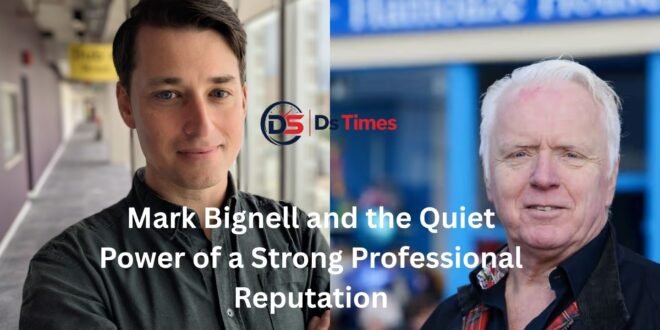
Some people become famous because they’re loud. Others build a reputation the slower way. Quietly. Consistently. Over years of work that speaks for itself.
Mark Bignell falls into that second category.
If you’ve come across the name before, chances are it wasn’t attached to celebrity-style attention or headline-chasing drama. It probably showed up in a business context, a professional recommendation, an industry conversation, or a project where credibility mattered more than noise. And honestly, that’s part of what makes the name interesting.
We live in a time where visibility often gets mistaken for value. The people getting the most attention online aren’t always the people doing the best work. That gap has become pretty obvious over the last few years.
What stands out about professionals like Mark Bignell is the opposite approach. Less performance. More substance.
That tends to age well.
Reputation still matters more than personal branding
There’s a strange pressure now to turn every career into content.
Post every achievement. Build a “thought leadership” strategy. Share motivational quotes before breakfast. Act like a brand at all times.
Some people thrive in that environment. Most don’t.
And here’s the thing: many experienced professionals still judge people the old-fashioned way. They look at reliability, decision-making, communication, consistency, and whether someone can actually deliver when things get complicated.
That’s usually where names like Mark Bignell gain traction.
Not through viral moments. Through accumulated trust.
You see it in almost every industry. The person everyone quietly recommends often isn’t the loudest person in the room. It’s the one who answers emails properly, handles pressure without creating chaos, and doesn’t disappear when a project hits problems.
That sounds basic. But it’s surprisingly rare.
A lot of careers are built on first impressions. Long careers are built on repeat impressions.
The difference between experience and performance
One reason seasoned professionals stand out is because they stop trying to look impressive all the time.
You notice this especially in meetings.
Someone with limited experience often talks constantly. They jump into every silence. They over-explain simple ideas because they want to prove competence.
People with real experience usually simplify things instead.
That calm confidence changes how others respond to them. It creates trust quickly because it feels grounded rather than rehearsed.
Mark Bignell’s professional reputation, from what many people associate with the name, seems tied to that type of presence. Practical rather than flashy. Steady rather than theatrical.
And honestly, that style tends to become more valuable as industries get noisier.
A company can survive someone being boring. It struggles when someone is unreliable.
Why consistency beats brilliance in the long run
Most people underestimate consistency because it doesn’t create dramatic stories.
Brilliance gets attention. Consistency builds careers.
Think about almost any workplace. The people managers rely on most usually aren’t the ones making dramatic declarations in meetings. They’re the ones who quietly solve problems every week without needing applause afterward.
There’s a small but important difference there.
One creates moments.
The other creates momentum.
Professionals who understand that tend to become trusted over time because people know what they’re getting. That predictability becomes incredibly valuable when deadlines tighten or stakes rise.
You can actually see this play out in everyday situations.
Imagine two people handling a difficult client issue.
One responds emotionally, escalates tension, and spends half the meeting defending themselves. The other stays measured, listens properly, and focuses on solving the problem instead of protecting their ego.
Guess which person gets called again next time.
That second approach rarely goes viral online. But it’s how strong reputations are built in real life.
The internet changed networking — but not human nature
Networking advice online often sounds exhausting.
“Build your personal brand.”
“Scale your visibility.”
“Optimize your professional narrative.”
Most people just want to do good work and have others trust them.
That’s still how many meaningful opportunities happen.
Someone remembers your name after a successful project. A former colleague recommends you privately. A client mentions you during a conversation. A connection made years ago suddenly matters again.
Those moments usually come from professionalism, not performance.
Names like Mark Bignell tend to circulate through those quieter channels. Word of mouth still matters. Probably more than people think.
And unlike social media popularity, trust built offline tends to last longer.
A thousand likes disappear in a day.
A strong professional reputation can shape a career for decades.
There’s something underrated about low-drama professionals
Let’s be honest. Every workplace has people who create unnecessary friction.
Some thrive on conflict. Others constantly chase recognition. A few turn ordinary communication into emotional theatre.
Over time, teams start valuing the opposite type of person more and more.
The low-drama professional.
The one who stays calm when things go sideways. The one who doesn’t need constant validation. The one who can disagree without becoming hostile.
That personality type often becomes quietly influential because people feel safe working with them.
Not “safe” in a corporate buzzword sense. Safe in the practical sense. Predictable. Stable. Professional.
That reliability creates opportunities naturally.
Managers trust them with larger responsibilities. Clients relax around them. Colleagues involve them in important decisions.
And usually, those people didn’t build that reputation intentionally. It developed through repeated behavior over time.
That’s how credibility actually works in the real world.
Professional maturity changes how people communicate
One of the clearest signs of experience is communication style.
You notice how mature professionals stop trying to win every conversation.
They ask more questions. They interrupt less. They focus on clarity instead of dominance.
It sounds simple, but it changes everything.
A lot of workplace conflict comes from people trying too hard to appear intelligent. They overcomplicate discussions, resist feedback, or treat disagreement like a personal attack.
Experienced professionals often do the reverse. They simplify things. They absorb criticism without collapsing emotionally. They focus on outcomes.
That kind of communication builds trust fast because it lowers tension around decision-making.
Whether in leadership, consulting, business operations, or client-facing roles, that ability becomes incredibly valuable.
People remember how interactions feel.
Not just what was said.
Why quiet credibility often outperforms hype
There’s a reason some professionals survive industry changes while others fade quickly.
Hype is fragile.
Credibility compounds.
A flashy reputation can create short-term opportunities, but long-term trust usually depends on smaller things repeated consistently over years. Meeting deadlines. Owning mistakes. Staying composed under pressure. Treating people properly even when there’s nothing to gain.
Those habits sound ordinary because they are ordinary.
That’s exactly why they matter.
Most organizations eventually become tired of personalities that require constant management. They start prioritizing people who make operations smoother instead of louder.
And interestingly, many respected professionals never seem obsessed with status. They focus more on doing the work well than being publicly celebrated for it.
That attitude often creates respect indirectly.
People can sense when someone is secure enough not to self-promote constantly.
Experience teaches restraint
Younger professionals often believe success comes from doing more.
More talking. More posting. More visibility. More reactions.
Experience usually teaches restraint instead.
Knowing when not to speak.
Knowing which conflicts aren’t worth escalating.
Knowing when patience beats urgency.
That shift matters.
A person who reacts emotionally to every challenge becomes difficult to trust in high-pressure environments. Someone who stays measured creates stability around them.
That doesn’t mean being passive or timid. It means understanding that not every situation benefits from intensity.
Some benefit from clarity.
Some benefit from patience.
Some simply need competence.
Professionals associated with steady reputations — including names like Mark Bignell — often seem to understand that instinctively.
The value of being dependable never disappears
Technology changes constantly. Industries evolve. Trends come and go.
Dependability never goes out of style.
It’s still one of the most valuable professional traits a person can have.
And strangely, it’s become rarer.
People are overwhelmed, distracted, burned out, or constantly chasing the next opportunity. That makes reliability stand out even more than it used to.
When someone consistently follows through, others notice.
Maybe not immediately. But over time, definitely.
Think about the people you genuinely trust professionally. Usually, they aren’t the most charismatic or impressive on the surface. They’re the people who repeatedly handled situations properly when it mattered.
That’s the foundation of a lasting reputation.
Not image. Pattern.
A good reputation is built slowly and lost quickly
One difficult truth about professional life is that reputations take years to build and minutes to damage.
That’s why experienced professionals often become more careful over time. Not fearful. Just aware.
They understand that communication matters. Integrity matters. Small decisions matter.
You don’t need perfection to build respect. But you do need consistency.
That’s harder than it sounds because consistency requires emotional discipline. Especially during stressful periods.
Anyone can act professional when things are easy.
The real test happens during pressure, disagreement, uncertainty, or failure.
That’s where reputations become real.
And honestly, people remember those moments more than polished presentations or carefully managed profiles.
Final thoughts on Mark Bignell
The reason names like Mark Bignell continue to resonate in professional circles has less to do with publicity and more to do with trust.
Not every respected professional becomes publicly famous. Many build influence the quieter way — through reliability, judgment, communication, and long-term consistency.
That kind of reputation doesn’t happen overnight.
It develops gradually through hundreds of interactions most people never see. A difficult conversation handled well. A promise kept. A calm response during pressure. A track record that becomes impossible to ignore.
In a world increasingly driven by attention, there’s still enormous value in substance.
Maybe more than ever.
