 Ds Times
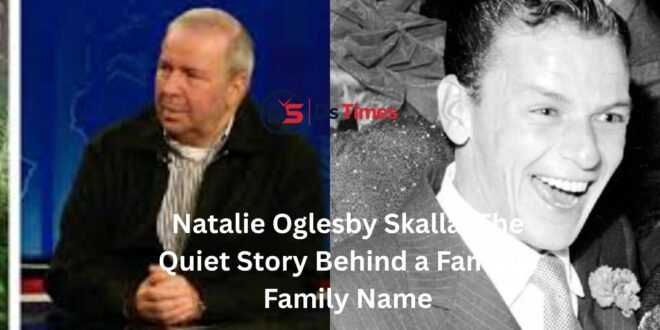
Most people who search for Natalie Oglesby Skalla are usually trying to connect a few dots. The last name sounds familiar. The family history feels tied to Hollywood. And somewhere along the way, curiosity kicks in.
That’s understandable.
Some people grow up with famous relatives and end up chasing the spotlight. Others do the exact opposite. Natalie Oglesby Skalla belongs to the second group. Her story is interesting precisely because it doesn’t follow the celebrity blueprint people expect.
There’s no endless stream of interviews. No reality show drama. No carefully crafted public image. Instead, what stands out is the contrast between fame surrounding a family and a person choosing a quieter, more grounded path.
And honestly, that makes her more relatable than many public figures today.
Growing Up Around a Famous Legacy
Natalie Oglesby Skalla is widely known as one of the daughters connected to the family of actor and comedian Frank Sinatra Jr., who himself was the son of legendary singer and entertainer Frank Sinatra.
That family connection naturally sparks interest. The Sinatra name carries decades of cultural weight. Even younger generations recognize it instantly. Music, Hollywood history, Las Vegas performances, old-school glamour. It all comes attached to the name whether someone asks for it or not.
Now here’s the thing. Growing up connected to a famous lineage can look glamorous from the outside, but real life is usually more complicated.
Imagine being introduced at family events where people already have assumptions about you before you even speak. Some expect talent. Some expect privilege. Others expect scandal. Very few expect normalcy.
That pressure can shape people in very different ways.
Some lean into the attention. Others spend years trying to escape it.
From what’s publicly known, Natalie Oglesby Skalla appears to have chosen a more private and practical life rather than building a celebrity identity around her family background.
That decision alone says a lot.
Why People Became Curious About Natalie Oglesby Skalla
Interest in Natalie increased largely because people remain fascinated by the Sinatra family tree.
Celebrity families always attract attention, especially when there are relatives who stay mostly out of public view. People want to know what happened to them. What they do now. Whether they inherited fame, talent, or wealth.
Sometimes the curiosity is harmless. Sometimes it turns into gossip culture.
But Natalie’s story doesn’t really fit the tabloid formula.
There aren’t endless controversies attached to her name. No viral social media feuds. No dramatic public appearances. In today’s internet culture, that almost feels unusual.
Ironically, staying private often creates even more curiosity.
You see this all the time with celebrity relatives who avoid attention. The less visible they are, the more people search for information about them. It becomes a mystery people want to solve.
A Life Outside the Entertainment Machine
One of the most interesting things about Natalie Oglesby Skalla is that she reportedly pursued work outside traditional entertainment fame.
That matters because celebrity culture tends to push a very narrow definition of success. Acting. Singing. Influencer careers. Public visibility. Brand deals.
But many people connected to famous families eventually realize something simple: fame isn’t always freedom.
In fact, it can become exhausting.
A quieter life with stable work, real relationships, and personal privacy can feel far more valuable than public recognition. Plenty of people who’ve tasted fame indirectly end up wanting distance from it.
Natalie’s life seems to reflect that kind of choice.
And let’s be honest, there’s something refreshing about seeing someone not trying to monetize every piece of family history.
Today, almost everyone with even minor public connections gets pushed toward building a personal brand online. The pressure is constant. Start a podcast. Launch a channel. Tell your story publicly. Share your trauma. Turn private life into content.
Not everyone wants that.
Some people simply want to live.
The Weight of the Sinatra Name
It’s impossible to talk about Natalie Oglesby Skalla without acknowledging the larger shadow cast by Frank Sinatra and his family legacy.
The Sinatra name represents more than music. It represents an era.
There’s an old-school mystique attached to it. Cocktail lounges. Tailored suits. Vegas stages. Big band records playing late at night. Even people who weren’t alive during Sinatra’s peak years still recognize the image instantly.
That kind of cultural legacy can become both a gift and a burden for descendants.
On one hand, it opens doors socially. People pay attention. Family history gets remembered. Connections exist.
On the other hand, comparisons never stop.
Imagine trying to build your own identity when your family name already carries global recognition. Even ordinary choices get interpreted through that lens.
If you become successful, people may assume nepotism. If you stay private, people think you’re hiding something. If you struggle, it becomes public fascination.
There’s really no perfectly comfortable lane.
That’s probably why some celebrity relatives intentionally build lives far removed from public entertainment.
Privacy Has Become Rare
Part of what makes Natalie Oglesby Skalla interesting today is how unusual privacy has become.
Years ago, it was easier for celebrity relatives to disappear into normal life. Today, internet culture archives everything. Public curiosity never fully dies. Search engines keep names alive indefinitely.
Even limited information becomes searchable forever.
That changes the experience of privacy completely.
A person can spend years living quietly and still become the subject of online speculation simply because people are curious about family connections.
You can actually see this pattern across many well-known families. Children, grandchildren, cousins, and distant relatives suddenly become topics of discussion despite never actively seeking attention.
Sometimes it feels unfair.
Not everyone connected to fame signed up for public analysis.
Why Quiet Lives Often End Up Happier
There’s a broader lesson in Natalie Oglesby Skalla’s story that goes beyond celebrity culture.
A quieter life is often underestimated.
Modern culture tends to reward visibility above everything else. If people know your name, you’re considered successful. If you’re trending online, you matter. If strangers constantly discuss your life, you’ve “made it.”
But real happiness rarely works that way.
Most people feel fulfilled through smaller, more personal things. Stable routines. Family connections. Meaningful work. Time away from constant judgment.
The internet sometimes forgets that.
You can see it whenever public figures talk openly about burnout. Endless visibility comes with emotional costs. Privacy starts feeling luxurious.
That’s why stories like Natalie’s resonate with people more than expected. There’s an unspoken admiration for someone who steps outside the fame cycle instead of feeding it constantly.
Public Curiosity Never Really Disappears
Even though Natalie Oglesby Skalla has maintained a relatively low public profile, interest around her name continues online.
That’s partly because people naturally want complete stories. Human beings dislike missing pieces. When information is limited, curiosity grows stronger.
Searches increase after documentaries, celebrity retrospectives, or renewed interest in Sinatra family history. New audiences discover old Hollywood stories and begin exploring extended family connections.
It becomes a kind of cultural archaeology.
One person searches for Frank Sinatra Jr. Then they discover references to family members. Then more questions appear.
That chain reaction happens constantly online.
And honestly, it probably won’t stop anytime soon. The Sinatra legacy remains too culturally significant for public interest to fully fade.
The Difference Between Fame and Identity
One thing Natalie Oglesby Skalla’s story quietly highlights is the difference between inherited fame and personal identity.
They’re not the same thing.
Being connected to a famous family may shape public perception, but it doesn’t automatically define who someone is as a person.
That distinction matters.
Celebrity culture often flattens individuals into categories. Someone becomes “the daughter of,” “the grandson of,” or “the relative of.” Their own individuality gets buried under association.
But real life is more layered than that.
Every person still has private ambitions, disappointments, routines, friendships, and struggles completely separate from public narratives.
It’s easy for outsiders to forget that.
A family name might open conversations, but it can’t replace a real identity.
There’s Something Human About Choosing Normalcy
What makes Natalie Oglesby Skalla’s story compelling isn’t scandal or fame. It’s restraint.
That may sound simple, but in modern culture it’s actually pretty rare.
People are constantly encouraged to perform their lives publicly. Share more. Reveal more. Stay visible. Keep audiences engaged.
Choosing normalcy instead can feel almost rebellious now.
And maybe that’s why stories like this stick with readers. Beneath all the celebrity curiosity is a very human question: what kind of life actually brings peace?
For some people, it’s recognition and applause.
For others, it’s being able to walk into a grocery store unnoticed, spend time with family, and build a life that belongs only to them.
There’s value in both paths. But the second one doesn’t get talked about enough.
Final Thoughts on Natalie Oglesby Skalla
Natalie Oglesby Skalla remains an intriguing figure largely because she exists at the edge of a famous American entertainment legacy without fully stepping into its spotlight.
That balance keeps people interested.
Her connection to the Sinatra family naturally draws attention, but her apparent preference for privacy gives the story a different tone than typical celebrity narratives. Instead of constant publicity, there’s distance. Instead of spectacle, there’s restraint.
And oddly enough, that restraint feels more authentic than many highly managed public personas people see online every day.
Sometimes the most interesting stories aren’t about fame itself. They’re about the people who had every reason to chase it and decided not to.
