 Ds Times
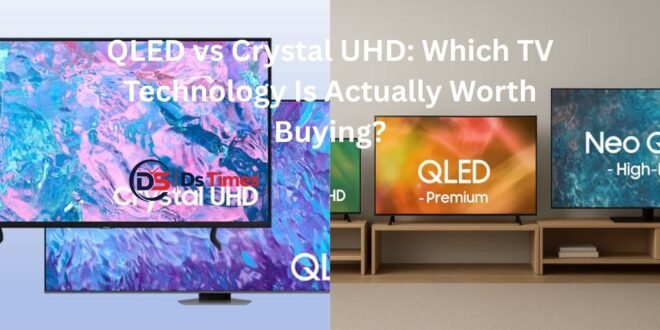
Buying a new TV sounds simple until you start comparing models. Then suddenly you’re staring at terms like QLED, Crystal UHD, Mini LED, HDR10+, and a dozen other buzzwords that seem designed to make the decision harder.
One comparison that comes up again and again is QLED vs Crystal UHD. Both are commonly found in Samsung’s TV lineup, both promise sharp 4K picture quality, and both can look impressive in a showroom. Yet they aren’t the same thing.
The tricky part is that many people assume QLED and Crystal UHD are competing technologies on equal footing. They aren’t. One is a more advanced display technology, while the other is primarily a branding category for Samsung’s standard 4K LED TVs.
So which one should you choose? The answer depends on how you watch TV, where you place it, and how much you’re willing to spend.
Understanding Crystal UHD
Crystal UHD is Samsung’s name for its entry-level and mid-range 4K LED TVs.
At their core, Crystal UHD televisions use traditional LED-backlit LCD panels. Samsung adds its Crystal Processor and color-enhancement technologies to improve picture quality, but the fundamental display structure remains similar to standard LED TVs.
For many households, that’s perfectly fine.
Imagine a family room where people mostly watch news, sports, YouTube, and streaming services a few hours each evening. A Crystal UHD TV can deliver a clear, detailed 4K image without costing a fortune.
The biggest advantage is value. You get modern smart TV features, 4K resolution, HDR support, and a sleek design at a relatively affordable price.
Picture quality is generally good, especially in normal lighting conditions. Colors look pleasant, details are sharp, and streaming content appears crisp.
Where Crystal UHD begins to show its limitations is in more demanding viewing situations. Dark scenes can look less impressive, brightness levels aren’t as high, and color performance isn’t as rich as more premium display technologies.
For casual viewing, many people won’t notice these differences right away. Side-by-side comparisons are where they become obvious.
What Makes QLED Different?
QLED stands for Quantum Dot Light Emitting Diode.
Despite the complicated name, the idea is fairly simple.
QLED TVs use a layer of quantum dots between the LED backlight and the LCD panel. These microscopic particles help produce more accurate and vibrant colors while improving brightness.
Think of it like upgrading from a decent set of speakers to a much better one. Both play the same song, but one reveals more detail, depth, and impact.
That’s essentially what happens with QLED.
Colors appear richer without looking unnatural. Bright highlights stand out more. HDR content has greater visual punch. The overall image often feels more dynamic and lifelike.
If you’ve ever watched a nature documentary filled with bright tropical birds, deep blue oceans, and vivid sunsets, QLED technology can make those scenes look noticeably more impressive.
The difference becomes even more apparent in bright rooms. Sunlight pouring through windows can wash out some TVs, but QLED models generally maintain better brightness and color performance.
That’s one reason they’re popular in living rooms rather than dedicated dark home theaters.
Picture Quality: Where the Gap Becomes Clear
Resolution alone doesn’t tell the whole story.
Both Crystal UHD and QLED models often offer 4K resolution. If you read the spec sheets, they may seem surprisingly similar.
Yet real-world viewing tells a different story.
A Crystal UHD TV can display over eight million pixels, just like a QLED TV. The distinction lies in how those pixels are illuminated and how colors are produced.
QLED typically delivers:
- Higher brightness
- Better color volume
- More vibrant HDR performance
- Improved contrast in many models
- Better visibility in bright rooms
Crystal UHD TVs still provide a sharp image, but they generally can’t match the intensity and richness that QLED offers.
Let’s say you’re watching a nighttime action movie.
On a Crystal UHD screen, dark scenes may appear flatter, and subtle details can get lost. On a QLED television, shadows often look more defined while bright highlights maintain their impact.
It’s not night and day, but it’s noticeable.
Especially once you’ve spent time with both.
Bright Room Performance Matters More Than People Think
Many buyers focus on resolution because it’s easy to understand.
Brightness often deserves more attention.
Modern homes tend to have large windows, open floor plans, and plenty of ambient light. Under those conditions, a TV’s ability to stay bright becomes important.
Crystal UHD TVs perform reasonably well in average rooms. However, strong daylight can reduce perceived contrast and make images appear less vibrant.
QLED models are built to handle these situations better.
A common example is watching a football game on a Sunday afternoon with sunlight streaming through the living room. The brighter display helps maintain image quality without forcing you to close curtains or dim the room.
That practical advantage affects everyday viewing more than many shoppers realize.
Gaming Performance
Gamers often ask whether QLED is worth the extra cost.
The answer depends on the type of gaming you do.
Both Crystal UHD and QLED televisions can support modern gaming consoles. Many models offer low input lag and smooth performance.
However, higher-end QLED TVs frequently include features that serious gamers appreciate, such as:
- Higher refresh rates
- Variable Refresh Rate (VRR)
- Better HDR gaming
- Enhanced motion handling
Fast-paced games benefit from these improvements.
Picture a racing game where cars are moving at high speed across a brightly lit track. A stronger display with better motion performance can make the experience feel smoother and more immersive.
Casual gamers may be perfectly happy with a Crystal UHD television. Competitive players and enthusiasts tend to notice the advantages of QLED more quickly.
Is QLED Better for Movies?
For movie lovers, QLED usually has the edge.
Films rely heavily on contrast, color accuracy, and HDR performance.
A good QLED TV can make cinematic content look more dramatic and engaging. Bright explosions stand out, sunsets look richer, and colorful scenes gain additional depth.
That said, not everyone watches movies in ideal conditions.
If you’re streaming Netflix a few nights a week and mainly want a reliable 4K experience, Crystal UHD may already meet your expectations.
The difference becomes more meaningful for people who regularly watch high-quality HDR content or enjoy creating a more theater-like experience at home.
The Price Difference
Budget often settles the debate.
Crystal UHD televisions are designed to be affordable. They deliver solid everyday performance without pushing buyers into premium price territory.
QLED models cost more because of the additional display technology and enhanced performance.
The gap varies depending on screen size and model year, but QLED televisions generally sit a step above Crystal UHD in Samsung’s lineup.
Here’s the practical way to think about it.
If your goal is simply getting a good-looking 4K smart TV at a reasonable price, Crystal UHD offers strong value.
If you’re already spending a significant amount on a large television and plan to keep it for several years, the extra investment in QLED often feels worthwhile.
A TV isn’t something most people replace every year. Paying a bit more upfront can provide a better viewing experience for a long time.
Who Should Buy a Crystal UHD TV?
Crystal UHD makes sense for buyers who want:
- A budget-friendly 4K TV
- Good everyday picture quality
- Streaming, sports, and general entertainment
- Smart TV features without premium pricing
It’s a practical choice for bedrooms, apartments, guest rooms, or living spaces where top-tier picture quality isn’t the highest priority.
Many households would be completely satisfied with a Crystal UHD model and never feel like they’re missing out.
Who Should Buy a QLED TV?
QLED is a better fit for viewers who care more about picture quality.
It works especially well for:
- Bright living rooms
- Movie enthusiasts
- Gamers
- Sports fans
- Buyers seeking stronger HDR performance
- People planning to keep their TV for many years
The enhanced brightness and color performance create a more premium viewing experience across almost every type of content.
For many users, that’s where the extra cost becomes easier to justify.
The Bottom Line
The QLED vs Crystal UHD debate isn’t really about which TV is good and which one is bad. Both can deliver a sharp 4K image and provide an enjoyable viewing experience.
The real difference comes down to picture quality expectations.
Crystal UHD offers excellent value and covers the needs of most casual viewers. It’s affordable, capable, and easy to recommend when budget matters.
QLED takes things further. Brighter images, richer colors, stronger HDR performance, and better visibility in bright rooms all contribute to a noticeably more premium experience.
If you’re shopping on a tight budget, Crystal UHD remains a smart choice. If you want the best picture quality your money can reasonably buy without stepping into ultra-premium territory, QLED is usually the stronger investment.
For most people standing in front of two similarly sized TVs, the question isn’t whether QLED is better. It usually is. The real question is whether those improvements matter enough to justify the higher price. For many buyers, the answer ends up being yes.
