 Ds Times
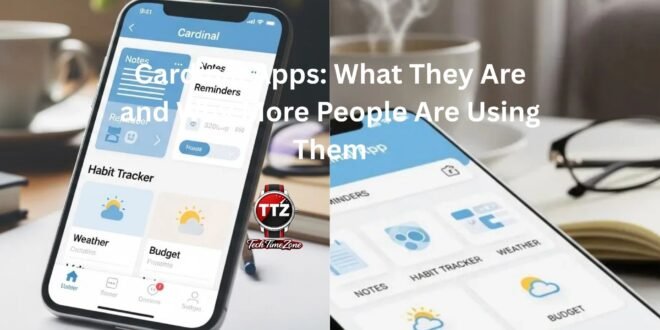
Technology has a funny way of becoming part of daily life without us even noticing. One day you’re juggling notes, reminders, passwords, and schedules across different platforms. The next, you’re relying on a handful of apps that quietly keep everything organized.
That’s where the conversation around cardinal apps often begins.
Whether you’re hearing the term for the first time or trying to understand why it keeps appearing in discussions about productivity and digital tools, there’s more to it than a simple app category. Cardinal apps are often viewed as essential applications that serve a core function in a person’s digital routine. They’re the tools people return to every day because they solve real problems quickly and reliably.
Think about your own phone. Chances are there are five or six apps you use constantly while dozens of others sit untouched for weeks. Those frequently used tools are often considered your personal cardinal apps.
Table of Contents
- What Are Cardinal Apps?
- Why Cardinal Apps Matter in Everyday Life
- Common Types of Cardinal Apps
- How People Build Their Digital Core
- The Features That Make Cardinal Apps Successful
- Cardinal Apps in Business and Professional Work
- Challenges Users Face With Too Many Apps
- Choosing the Right Cardinal Apps for Your Needs
- The Future of Cardinal Apps
- Final Thoughts
What Are Cardinal Apps?
The term “cardinal” traditionally refers to something fundamental, principal, or highly important. When applied to software, cardinal apps are generally the applications people depend on most.
They aren’t necessarily the most advanced tools available. They simply provide consistent value.
For one person, a messaging app might be indispensable. For another, it’s a calendar, project manager, or budgeting tool. The specific app can vary, but the role remains the same: it becomes a central part of daily workflows.
Imagine losing access to all the apps on your phone except five. Which ones would you keep?
The answers usually reveal your personal cardinal apps.
These applications tend to sit at the center of communication, organization, productivity, entertainment, or financial management.
Why Cardinal Apps Matter in Everyday Life
Modern life moves fast.
People manage work meetings, family schedules, shopping lists, bills, travel plans, and personal goals through digital tools. Without a reliable system, things fall through the cracks.
Cardinal apps help reduce that chaos.
Let’s be honest. Most people don’t want to spend hours learning complicated software. They want tools that work immediately and continue working every day.
That’s why certain apps become deeply integrated into routines.
A student may open a note-taking app before every class. A small business owner might check an accounting platform several times daily. A parent could rely on a shared calendar to coordinate school pickups, appointments, and family events.
These aren’t occasional tools.
They’re digital essentials.
Over time, people build habits around them. The apps become part of how tasks get completed and decisions get made.
Common Types of Cardinal Apps
While everyone’s setup looks different, some categories appear repeatedly.
Communication apps are perhaps the most obvious example. Email platforms, messaging services, and video conferencing tools have become essential for both personal and professional interactions.
Productivity apps also occupy a central role. These include task managers, calendars, note-taking systems, and document editors.
Financial tools deserve mention as well. Many users depend on banking apps, budgeting software, and payment platforms multiple times each week.
Then there are health and wellness applications. Fitness tracking, meal planning, meditation, and health monitoring tools have become increasingly important for many people.
Navigation apps represent another category that quietly earns cardinal status. Few people think about them until they’re needed. Then suddenly they’re indispensable.
The interesting part is that cardinal apps aren’t always flashy.
Often, they’re the apps people rarely talk about because they simply work.
How People Build Their Digital Core
Nobody wakes up and decides to create a set of cardinal apps.
It happens gradually.
A person downloads an app to solve a specific problem. It works well. They use it again. Weeks later it becomes routine.
Then another challenge appears.
A second app fills that gap.
Eventually, a small collection emerges that supports nearly every aspect of daily life.
Here’s a simple example.
Someone starts using a calendar app for appointments. Later they add a task manager for work projects. Then they connect cloud storage for documents and a messaging platform for communication.
Without planning it, they’ve built a digital ecosystem.
Each app serves a different purpose, but together they create a streamlined workflow.
The strongest cardinal app collections share one trait: simplicity.
Too many overlapping tools often create confusion instead of efficiency.
The Features That Make Cardinal Apps Successful
Not every app earns a permanent place on someone’s device.
Most get deleted fairly quickly.
The apps that survive usually have several characteristics in common.
Reliability comes first.
People forgive missing features more easily than they forgive crashes and bugs. If an app fails during an important moment, trust disappears quickly.
Ease of use matters just as much.
Nobody wants to navigate ten menus just to complete a basic task. Successful cardinal apps reduce friction rather than create it.
Consistency also plays a huge role.
Users appreciate predictable experiences. When an app behaves the same way every time, confidence grows naturally.
Another important factor is integration.
Modern users expect apps to work together. Calendar events should sync across devices. Files should be accessible from multiple locations. Notifications should arrive when needed.
Convenience often beats complexity.
That’s a lesson many software developers continue to learn.
Cardinal Apps in Business and Professional Work
Businesses rely on cardinal apps just as heavily as individuals.
In many organizations, a handful of applications support nearly every major operation.
Project management platforms help teams coordinate tasks. Communication tools keep employees connected. Customer relationship systems track interactions and sales opportunities.
Without these core applications, productivity often drops dramatically.
Consider a remote team working across different countries.
They might use one platform for messaging, another for video meetings, a third for document collaboration, and a fourth for project tracking.
Those tools become the backbone of daily operations.
Now imagine one of them suddenly disappears.
Confusion spreads almost immediately.
Deadlines become harder to track. Information gets lost. Communication slows down.
That’s the power of cardinal apps in professional environments. They provide structure and continuity.
Challenges Users Face With Too Many Apps
Here’s the thing.
The average smartphone owner downloads far more apps than they actually use.
At first glance, having more options seems beneficial. In reality, it often creates digital clutter.
People switch between platforms unnecessarily. Notifications multiply. Information becomes fragmented across different systems.
A common scenario looks like this:
Notes are stored in one app.
Tasks live somewhere else.
Files are scattered across multiple cloud services.
Messages arrive through several communication platforms.
Before long, finding information becomes frustrating.
Many productivity experts recommend reducing app overload by focusing on a smaller set of trusted tools.
That advice makes sense.
A carefully selected group of cardinal apps can often accomplish more than dozens of specialized applications.
Sometimes less really is more.
Choosing the Right Cardinal Apps for Your Needs
Finding the right apps isn’t about following trends.
What works for a software developer may not work for a teacher, student, freelancer, or business owner.
The better approach is identifying recurring challenges.
Do you struggle with organization?
A task management app may deserve a central role.
Need better communication?
A reliable messaging platform might become essential.
Trying to manage finances more effectively?
A budgeting tool could become one of your most valuable digital assets.
It’s worth evaluating apps based on actual usage rather than marketing claims.
Pay attention to which applications you naturally open every day.
Notice which ones genuinely save time.
The most useful cardinal apps often reveal themselves through consistent use rather than deliberate planning.
And don’t be afraid to remove tools that no longer serve a purpose.
Digital habits evolve over time.
The Future of Cardinal Apps
Technology continues to change rapidly, but the concept behind cardinal apps isn’t going away.
If anything, it may become even more important.
As software ecosystems grow larger, users increasingly look for simplicity. They want fewer tools that accomplish more tasks efficiently.
Cross-platform functionality will likely become even more valuable. People expect seamless experiences across phones, tablets, laptops, and smart devices.
Personalization will also play a larger role.
Future cardinal apps may adapt automatically to user preferences, schedules, and behaviors, making daily interactions feel more natural.
Security remains another major priority.
As more personal and professional information moves into digital systems, trusted apps will need stronger privacy protections and transparent data practices.
The apps that successfully balance convenience, security, and simplicity are likely to remain central to people’s digital lives for years to come.
Final Thoughts
Cardinal apps aren’t defined by popularity alone. They’re defined by importance.
These are the applications people rely on when they need to stay organized, communicate effectively, manage responsibilities, or simply navigate everyday life.
Some help businesses operate smoothly. Others keep personal schedules on track. A few quietly handle essential tasks without attracting much attention.
What makes them valuable isn’t a long feature list or flashy design. It’s the ability to solve real problems consistently.
Take a moment to look at your own device. The handful of apps you open every day probably reveal more about your routines than you realize.
Those are your cardinal apps—the digital tools that keep everything moving forward.
