 Ds Times
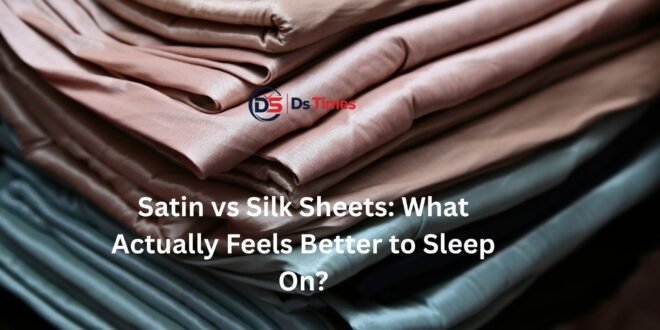
You know that moment when you slip into bed and instantly feel whether it’s going to be a good night or not? Sheets play a bigger role in that than most people admit. And once you start looking beyond basic cotton, you’ll almost always land on the same question: satin or silk?
They sound similar. They look similar. Both have that smooth, slightly glossy finish that makes a bed feel a bit more put together. But once you actually sleep on them, the differences show up fast.
Let’s break it down in a way that actually helps you decide, not just admire fabric names.
What You’re Really Choosing Between
Here’s the thing most people miss at the start. Silk is a material. Satin is a weave.
Silk comes from natural fibers, usually produced by silkworms. It’s been around forever and has that reputation for luxury for a reason.
Satin, on the other hand, is how fabric is woven to get that smooth, glossy surface. It can be made from silk, but most satin sheets you’ll find are made from polyester or nylon.
That’s why satin is usually cheaper. It’s not necessarily worse. Just different.
The Feel: Smooth, But Not the Same
At first touch, both feel soft. Cool. Slippery, even. But give it a full night.
Silk feels more natural. It has this subtle softness that doesn’t feel artificial. It kind of adjusts to your body temperature without you noticing. You don’t wake up thinking about it. That’s usually a good sign.
Satin, especially polyester satin, can feel a bit more slippery. Some people love that. Others find it slightly too “slick,” like your pillowcase might slide away when you turn over.
Imagine this. You shift in your sleep, half-awake. With silk, things stay put. With satin, you might notice a bit more movement.
Not a dealbreaker. Just something you’ll feel over time.
Breathability Matters More Than You Think
Let’s be honest. Nobody wants to wake up sweaty and tangled in sheets that feel like plastic wrap.
Silk breathes. It’s naturally temperature-regulating. Warm when it’s cold. Cool when it’s warm. It doesn’t trap heat the same way synthetic fabrics do.
Satin depends on what it’s made of. Polyester satin tends to hold heat. Not always uncomfortably, but enough that if you already sleep warm, you’ll notice.
This is where personal habits come in.
If you’re someone who kicks the blanket off at 3 a.m., silk might quietly fix that without you even realizing it.
If you’re always cold, satin might actually feel cozier.
Skin and Hair: The Real-Life Difference
This is where things get interesting, because the benefits show up in small, everyday ways.
Silk is gentle on skin. It doesn’t pull or create friction. That means fewer sleep lines and less irritation, especially if you have sensitive skin.
Hair-wise, silk helps reduce frizz and breakage. You wake up with hair that’s… not perfect, but noticeably less chaotic.
Satin does something similar, just not quite at the same level.
It still reduces friction compared to cotton. Your hair won’t snag. Your skin won’t feel rough. But since most satin sheets are synthetic, they don’t have the same natural softness or moisture balance.
Think of it like this:
Silk is the quiet overachiever.
Satin is the practical alternative that gets you most of the way there.
Price: Where Reality Steps In
Here’s where the decision often gets made.
Silk sheets are expensive. Not a little. A full set can easily cost several times more than satin.
And it’s not just branding. Real silk is harder to produce, and that shows in the price.
Satin sheets, especially polyester satin, are much more affordable. You can get the look and a similar feel without committing to a luxury-level budget.
So the question becomes: how much does the difference matter to you?
If you’re just upgrading from basic sheets and want something smoother, satin makes sense.
If you’re chasing comfort and don’t mind paying for it, silk starts to justify itself.
Durability: What Lasts Longer?
You might expect silk to be tougher because it’s natural. But it’s actually more delicate.
Silk needs care. Gentle washing. No harsh detergents. Air drying is usually best. Treat it wrong, and it won’t last as long as you’d like.
Satin, especially synthetic satin, is more forgiving.
You can toss it in the washing machine without thinking too much. It handles regular use better. Less stress, less maintenance.
So it comes down to how you live.
If you’re the kind of person who separates laundry and reads care labels, silk works.
If you just want something that survives weekly washes without fuss, satin is easier.
The Look: Subtle vs Shiny
Both fabrics look smooth, but the finish is different.
Silk has a softer sheen. It reflects light gently. It feels understated, even when it’s expensive.
Satin tends to be shinier. More reflective. Sometimes that looks elegant. Sometimes it can feel a bit over the top, depending on the color and lighting.
Picture a bedroom with soft, natural light. Silk blends in. Satin stands out.
Neither is right or wrong. Just different vibes.
Comfort Over Time
This is the part most quick comparisons skip.
How do these sheets feel after weeks, not minutes?
Silk tends to get better with time. It softens. It settles. It becomes something you don’t think about because it just works.
Satin can stay consistent, but lower-quality satin might start to feel less smooth after repeated washes.
Also, that initial slippery feel can either grow on you or start to annoy you. It really depends on personal preference.
Who Should Actually Choose Silk?
Silk makes sense if you care about the details.
If you notice how your skin feels in the morning. If your hair tangles easily. If you’re sensitive to heat. If you enjoy things that feel quietly high-quality.
It’s not about showing off. It’s about comfort you feel over time.
Also, if you already invest in good bedding, silk fits right in.
Who’s Better Off With Satin?
Satin is the easier choice for most people.
It’s affordable. It looks good. It feels smooth enough to be a noticeable upgrade from cotton.
If you’re testing the waters or just want something that feels a bit more luxurious without the commitment, satin does the job well.
And honestly, a good-quality satin sheet can still feel great. It’s not a compromise as much as it is a different lane.
The Small Details That Add Up
Here’s something you only notice after a few nights.
Silk tends to stay cooler to the touch. That initial feeling when you lie down? It’s consistently pleasant.
Satin can vary. Sometimes cool, sometimes a bit warmer depending on the room temperature.
Also, silk absorbs less moisture from your skin compared to cotton, which helps keep your skin feeling balanced overnight.
Satin doesn’t quite do that in the same way, especially if it’s synthetic.
These aren’t huge differences in isolation. But combined, they shape how you feel waking up.
So, Which One Wins?
There isn’t a universal winner. That’s the honest answer.
Silk is better in terms of comfort, breathability, and overall feel. It’s the premium experience.
Satin is better in terms of price, durability, and ease of care. It’s the practical choice.
It really comes down to what matters more to you right now.
If you want something low-maintenance that still feels nice, go satin.
If you’re ready to invest in how your bed feels every single night, silk starts to make a lot of sense.
Final Thoughts
Most people don’t think about their sheets until something feels off. Too hot. Too rough. Too… forgettable.
Switching to either satin or silk changes that. You notice your bed again. In a good way.
If you’re unsure, starting with satin isn’t a bad move. You’ll get a feel for that smooth texture without spending too much.
But if you ever try silk and it fits your routine, it’s hard to go back. Not because satin is bad. Just because silk has a way of quietly raising the bar.
And once you’ve slept on something that feels right, you don’t really want to settle for less.
