 Ds Times
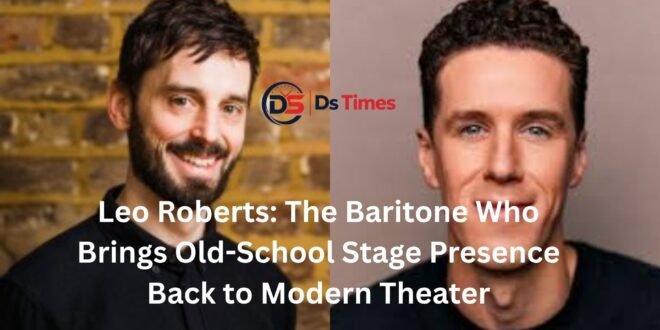
Some performers walk onto a stage and immediately make you pay attention. Not because they’re loud. Not because they’re flashy. They just have presence. Leo Roberts fits that category.
If you’ve followed West End productions, Broadway touring casts, or even modern musical performances online, there’s a good chance you’ve come across him without realizing it at first. Maybe it was a clip from Les Misérables. Maybe a performance from Spamalot. Maybe one of those stripped-back piano-and-vocal recordings floating around social media late at night when the algorithm suddenly gets your taste exactly right.
What makes Leo Roberts interesting isn’t only his voice. Plenty of people can sing. Theater schools produce technically gifted performers every year.
The difference is that Roberts feels grounded in an older tradition of stage performers. The kind of actors who understand that singing is only half the job. The other half is making people believe every word.
That’s harder than it sounds.
A Voice That Actually Sounds Lived In
There’s something refreshing about hearing a baritone voice that doesn’t feel overproduced or polished into perfection.
Leo Roberts has that classic musical theater tone. Warm. Deep. Controlled. But there’s also roughness around the edges in a good way. It gives performances weight.
Listen to a lot of modern vocal performances and you’ll notice a pattern. Everything aims for technical perfection. Huge high notes. Precision. Vocal gymnastics.
Roberts leans in another direction. He sounds more interested in storytelling than showing off.
That matters more than people think.
A theater audience doesn’t remember every perfect note. They remember moments. A line delivery. A pause before a lyric. A look across the stage.
That’s probably why he fits naturally into productions like Les Misérables, where emotional credibility matters just as much as vocal strength.
The role of Javert, which Roberts has performed, is a good example. It’s easy to play Javert as stiff or one-dimensional. A lot of actors accidentally turn him into a walking wall of authority.
But the role only works when you feel the character cracking underneath all that control.
That’s where Roberts seems strongest as a performer. He understands restraint.
Theater Still Needs Performers Like This
Here’s the thing about modern musical theater.
It moves fast.
Productions are bigger. Social media clips matter more. Casting conversations happen online before shows even open. There’s pressure to create viral moments instead of memorable performances.
In that environment, performers like Leo Roberts stand out because they don’t feel built for internet attention.
They feel built for the stage.
That sounds simple, but it changes everything.
You can usually tell within five minutes whether someone developed their instincts in live theater or primarily through camera work and digital performance spaces. Stage actors understand rhythm differently. They know how to hold silence. They know how to project emotion all the way to the back row without making it feel exaggerated.
Roberts carries that old-school theatrical energy.
Not in a dated way.
More in the sense that he seems genuinely connected to the tradition of musical performance itself.
There’s also an athletic quality to his stage presence. That may sound odd if you haven’t spent much time around theater productions, but endurance matters. Performing eight shows a week demands physical discipline most people underestimate.
A lot of theater fans romanticize the profession.
The reality is less glamorous.
Long rehearsals. Constant travel. Vocal maintenance. Injury prevention. Repeating emotionally intense scenes night after night while somehow keeping them fresh.
Good performers make it look effortless.
From the West End to Broader Recognition
Leo Roberts built much of his reputation through the West End theater scene, where consistency matters more than hype.
That’s one reason theater audiences tend to trust performers who survive there for years. London productions can be brutally demanding, and audiences are experienced enough to recognize when somebody is coasting.
Roberts worked through major productions including Les Misérables, Show Boat, and Shrek the Musical, while also appearing in concert performances connected to the BBC Proms.
That range says a lot.
Some actors are excellent in dramatic roles but struggle with comedy. Others can handle lighter material but don’t carry enough emotional gravity for serious productions.
Moving between those worlds takes flexibility.
And honestly, flexibility is underrated in theater conversations.
People love discussing lead roles and star power, but long careers are usually built by performers who can adapt. One month they’re in a dramatic production. The next they’re doing concert work. Then a touring show. Then voice acting.
That kind of career requires professionalism more than celebrity.
Roberts seems very much part of that tradition.
The Social Media Era Changed Theater Performers
A strange thing has happened over the last decade.
Musical theater performers became more publicly visible than ever before.
Years ago, unless you attended productions regularly, many stage actors remained relatively unknown outside theater circles. Now clips spread online instantly. Fans follow rehearsals, backstage moments, cast recordings, and interviews in real time.
Leo Roberts has benefited from that shift while still feeling somewhat separate from it.
That balance is interesting.
Some performers fully lean into internet culture. Others avoid it completely. Roberts seems to exist somewhere in the middle.
You’ll find performance clips and musical recordings online, but there’s still a degree of mystery around him. That’s rare now.
And maybe it actually helps.
Modern audiences are overloaded with content. Constant visibility can flatten performers into personalities instead of artists.
A little distance keeps the focus on the work itself.
There’s also something undeniably satisfying about discovering a performer through an actual performance instead of a marketing campaign.
It feels earned.
Why Baritones Still Matter in Modern Musicals
Tenors usually get the spotlight.
That’s just reality.
Big soaring notes tend to dominate musical theater conversations because they create immediate reactions. But baritones often carry the emotional foundation of productions.
They bring gravity.
Leo Roberts represents a style of baritone performance that still matters deeply in theater, even if it gets less mainstream attention.
Think about characters like Javert or many classic leading men from older musicals. These roles need authority, maturity, and emotional complexity.
A lighter voice often changes the entire feeling of the character.
Roberts has the kind of vocal texture that naturally supports those roles.
Not every singer can create emotional tension without overselling it.
That’s a surprisingly rare skill.
There’s a moment many theater fans know well. You hear a performer hit a technically difficult note, and everyone applauds immediately.
Then there’s the other kind of moment.
The quiet one.
The audience goes completely still.
Nobody coughs. Nobody shifts in their seat.
That silence usually means the performer connected emotionally rather than just technically.
Roberts seems particularly effective at creating that kind of atmosphere.
The Reality Behind Theater Careers
One thing people outside theater often misunderstand is how unstable performing careers can be.
Even successful actors constantly move between auditions, contracts, rehearsals, travel schedules, and uncertainty.
A performer might appear in a major production one season and spend months searching for the next opportunity.
That instability shapes people.
It usually creates one of two outcomes.
Either performers become cynical, or they develop real resilience.
Watching interviews and performances from experienced theater actors, you start noticing who genuinely loves the craft itself. Not the attention. Not the applause. The actual work.
Leo Roberts gives off that impression.
There’s a practical professionalism behind many long-running stage careers that audiences don’t always see.
Showing up prepared.
Protecting your voice.
Maintaining consistency.
Learning choreography under pressure.
Stepping into understudy situations with almost no notice.
It’s a profession built on repetition, discipline, and recovery.
And honestly, that’s probably why seasoned theater performers often seem calmer than celebrities from other entertainment spaces. They’re trained to handle pressure publicly.
If something goes wrong live, there’s no editing room to save you.
You adapt instantly or the audience notices.
A Performer Who Feels Timeless
Some performers are deeply tied to a specific entertainment trend.
Others feel like they could belong in almost any era.
Leo Roberts falls into the second category.
You can imagine him performing in classic golden-age musicals decades ago, but he also works comfortably within modern productions.
That flexibility comes from fundamentals.
Strong vocal control. Stage discipline. Emotional clarity.
Those qualities don’t really age.
And maybe that explains why audiences continue responding to performers like him even as theater changes around them.
People still want authenticity.
Not manufactured authenticity.
Actual emotional honesty.
Even in large productions with elaborate staging and technical effects, audiences connect most strongly to performers who feel human.
That sounds obvious, yet it’s surprisingly difficult to achieve.
Especially in musical theater, where everything can become heightened very quickly.
Roberts avoids that trap by keeping performances grounded.
He understands that subtlety can sometimes land harder than intensity.
The Quiet Strength of Career Performers
There’s a certain kind of respect theater communities reserve for dependable performers.
Not necessarily the biggest celebrities.
The reliable ones.
The actors who consistently deliver strong performances, support productions, and elevate scenes without demanding constant attention.
Leo Roberts seems to fit comfortably into that category.
And those performers often end up shaping theater culture more than casual audiences realize.
They become the backbone of productions.
Directors trust them. Cast members rely on them. Audiences remember them.
It’s less flashy than instant fame, but probably more meaningful over time.
A lot of entertainment careers burn bright and disappear quickly.
Theater rewards endurance differently.
You build reputation slowly.
One role at a time.
One audience at a time.
One performance at a time.
That process feels increasingly rare in modern entertainment culture, where everything moves at internet speed.
Maybe that’s another reason performers like Roberts stand out.
They remind audiences that craft still matters.
Final Thoughts
Leo Roberts may not dominate celebrity headlines, but that’s almost beside the point.
His appeal comes from something more durable.
He represents a style of performance rooted in skill, emotional intelligence, and genuine stage presence.
Not hype.
Not gimmicks.
Just solid, compelling performance work.
And honestly, theater needs more of that.
The entertainment industry changes constantly. Trends come and go. Production styles evolve. Audience habits shift.
But audiences still respond to performers who make characters feel real.
That part never changes.
Leo Roberts understands it.
You can hear it in the voice, see it in the performances, and feel it in the way audiences react when he’s on stage.
For a theater performer, that’s about as meaningful as it gets.
