 Ds Times
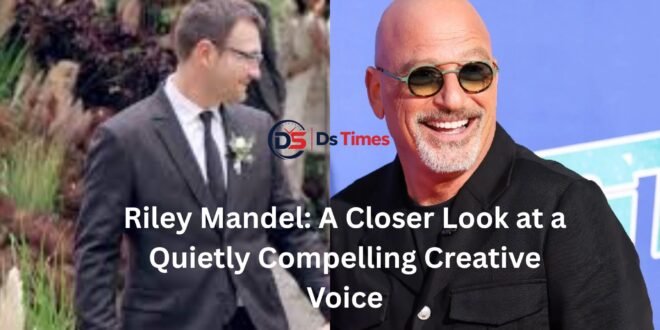
Some names pop up loudly. Others take a slower path, showing up here and there until you start noticing a pattern. Riley Mandel falls into that second category—the kind of presence that doesn’t demand attention but earns it over time.
If you’ve come across the name, chances are it wasn’t through a flashy headline or a viral moment. It was probably something subtler. A project credit. A thoughtful piece of work. Maybe even a recommendation from someone whose taste you trust. That’s usually how it starts.
So what makes Riley Mandel interesting isn’t just what they do—it’s how they show up in their work.
The Appeal of Someone Who Doesn’t Try Too Hard
Let’s be honest. There’s a lot of noise out there. Everyone’s pushing, promoting, optimizing. And then you run into someone like Riley Mandel, whose work feels… unforced.
That’s rare.
There’s a kind of restraint in Mandel’s approach. Not in a minimalist, stripped-down way, but in a deliberate, thoughtful sense. Nothing feels rushed. Nothing feels like it’s trying to impress you. And ironically, that’s exactly why it does.
You know that feeling when you read something or see something and it just clicks without effort? That’s the zone Mandel seems to operate in.
It’s not about complexity. It’s about clarity.
A Style That Feels Lived-In
One thing that stands out pretty quickly is how grounded the work feels. There’s a lived-in quality to it. Like it wasn’t created in isolation but shaped by actual experience—real observations, real interactions, real thought.
Imagine someone sitting in a café, not glued to their phone, but actually watching people. Noticing the small stuff. The way someone hesitates before speaking. The rhythm of a conversation. The awkward pauses. That kind of awareness tends to show up in Mandel’s work.
It’s not flashy storytelling. It’s observant storytelling.
And that’s harder than it looks.
Why Subtlety Wins in the Long Run
Here’s the thing. Big, dramatic work gets attention fast. Subtle work sticks around.
Riley Mandel leans into that second category. There’s a confidence in not overexplaining, not overproducing, not overdelivering. Just enough detail to draw you in, but not so much that it feels heavy.
Think about a scene in a film where nothing “major” happens, but you still can’t look away. That’s the kind of energy Mandel brings. It trusts the audience to meet the work halfway.
And people usually do.
The Human Element That Ties It Together
A lot of creators talk about being “authentic,” but it often feels like a performance. With Mandel, the authenticity doesn’t feel staged.
It shows up in small choices.
A slightly imperfect phrasing that feels more real than polished. A moment that lingers just a bit longer than expected. A perspective that doesn’t try to wrap everything up neatly.
That’s where the human element lives—not in perfection, but in honesty.
You can picture real situations behind the work. Conversations that didn’t go exactly as planned. Ideas that evolved instead of arriving fully formed. That sense of process is part of the appeal.
Not Chasing Trends—And Why That Matters
Now, let’s talk about something that’s easy to underestimate: restraint in a trend-driven world.
Riley Mandel doesn’t seem overly concerned with what’s currently popular. That doesn’t mean the work feels outdated. It just doesn’t feel reactive.
There’s a difference.
When someone chases trends, you can usually tell. The work feels slightly disconnected, like it’s trying to fit into a mold rather than grow naturally. Mandel’s approach feels the opposite. It’s steady. Intentional.
And over time, that builds trust.
You start to expect a certain level of thoughtfulness. Even if the subject changes, the approach stays consistent.
Small Details That Do Heavy Lifting
If you pay attention, you’ll notice something else: the small details matter a lot.
Not in a perfectionist way, but in a meaningful way.
A line that lands just right. A transition that feels smooth without drawing attention to itself. A choice that seems simple until you realize how much it shapes the overall experience.
It’s like walking into a well-designed room. You might not immediately notice why it feels good, but everything is working together quietly.
That’s the kind of craft Mandel brings.
The Balance Between Thoughtful and Accessible
Some work leans so far into being “thoughtful” that it becomes hard to connect with. Other work is easy to consume but doesn’t leave much behind.
Riley Mandel sits in that middle ground.
There’s depth, but it doesn’t feel heavy. There’s accessibility, but it doesn’t feel shallow.
That balance is tricky. It means knowing when to simplify and when to let things breathe. It means trusting the audience without overwhelming them.
A simple example: explaining a complex idea without making the reader feel like they’re in a lecture. Mandel tends to do that well—breaking things down just enough, then stepping back.
A Quiet Confidence That Builds Over Time
Confidence in creative work doesn’t always look loud. Sometimes it looks like consistency.
Showing up. Doing the work. Refining the approach.
Riley Mandel’s presence feels like that kind of confidence. It’s not about one standout moment. It’s about a pattern of thoughtful output that builds credibility over time.
Think of it like someone who doesn’t talk much in a meeting but, when they do, people listen. Not because they’re trying to dominate the conversation, but because what they say tends to matter.
That’s the energy.
What You Can Take From Mandel’s Approach
Even if you’re not in the same field, there’s something useful here.
First, you don’t need to be the loudest voice to be effective. In fact, a quieter, more deliberate approach can cut through the noise more clearly.
Second, paying attention—really paying attention—gives you material that no trend can replicate. Observations, small moments, human behavior. That’s where originality often comes from.
And third, consistency beats bursts of intensity. A steady, thoughtful output builds something more durable than occasional flashes of brilliance.
It’s not the fastest path. But it’s a solid one.
The Subtle Art of Leaving Space
One of the more interesting aspects of Mandel’s work is what isn’t there.
Not everything is spelled out. Not every idea is pushed to its limit. There’s space for interpretation.
That can feel risky. It means letting go of control and allowing the audience to bring their own perspective.
But when it works, it creates a stronger connection. People don’t just consume the work—they participate in it.
You fill in the gaps. You relate it to your own experience. And suddenly, it feels more personal.
Why That Kind of Work Sticks
Think about the last piece of work that stayed with you. Chances are, it didn’t hit you over the head. It lingered.
Riley Mandel’s approach leans into that kind of staying power.
It’s not about immediate impact. It’s about resonance.
Something you think about later. Something that shifts your perspective slightly. Something that feels relevant beyond the moment you encountered it.
That’s a different kind of success. Less visible, maybe—but often more meaningful.
A Presence That Feels Sustainable
There’s also something to be said for sustainability.
A lot of creative output burns bright and then fades. It’s intense, but hard to maintain. Mandel’s approach feels more balanced.
There’s no sense of burnout baked into the work. No urgency that feels forced. Just a steady rhythm.
That matters, especially over time. It means the work can evolve without losing its core identity.
And it means the audience can grow with it.
Closing Thoughts: Why Riley Mandel Is Worth Watching
Not every compelling figure comes with a clear, easy narrative. Riley Mandel isn’t defined by a single breakthrough or a loud public persona.
Instead, the appeal comes from consistency, thoughtfulness, and a clear sense of perspective.
It’s the kind of work that rewards attention. The more you engage with it, the more you notice. And the more you notice, the more it sticks.
In a world that often rewards speed and volume, Mandel offers something different: a slower, more deliberate approach that still manages to connect.
And that’s exactly why it stands out.
