 Ds Times
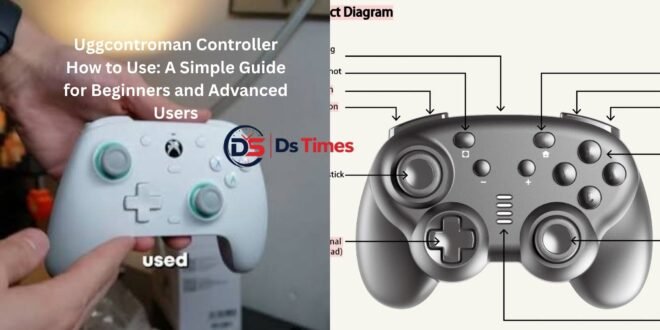
Getting a new controller should be exciting. Yet many people end up staring at buttons, menus, and connection settings wondering where to begin. If you’ve recently picked up one and are searching for uggcontroman controller how to use, you’re definitely not alone.
The first few minutes can feel confusing. A controller may look straightforward on the surface, but every model has its own setup process, button layout, and customization options. The good news is that most of the learning curve disappears once you understand the basics.
Whether you’re using the controller for gaming, simulations, media control, or other compatible applications, understanding how it works can dramatically improve your experience. A few small adjustments can make controls feel smoother, more responsive, and much more comfortable.
Table of Contents
- Understanding the Uggcontroman Controller
- Getting Started for the First Time
- Connecting the Controller to Your Device
- Learning the Button Layout
- Adjusting Settings for Better Performance
- Customizing Controls to Match Your Style
- Common Problems and Easy Fixes
- Tips That Make Daily Use Easier
- Getting Better Results in Games and Applications
- Final Thoughts
Understanding the Uggcontroman Controller
Before jumping into setup instructions, it helps to understand what makes a controller useful in the first place.
A controller acts as the bridge between your actions and the software you’re controlling. Every button press, trigger pull, or joystick movement sends a command instantly.
The Uggcontroman controller is designed around simplicity and responsiveness. While exact features may vary depending on the version, most models include:
- Analog sticks
- Directional pad (D-pad)
- Action buttons
- Shoulder buttons
- Trigger controls
- Connection and pairing functions
- Configuration options
Think of it like learning a new car. The steering wheel, pedals, and mirrors all serve familiar purposes, but each vehicle feels slightly different. Controllers work the same way.
Once your hands become familiar with the layout, everything starts feeling natural.
Getting Started for the First Time
When learning uggcontroman controller how to use, the first step is preparing the controller properly.
Begin by checking whether the battery is fully charged. Many connection issues that users blame on software actually come from low battery levels.
After charging, inspect the controller briefly.
Make sure:
- Buttons move freely
- Joysticks return to center position
- Triggers respond smoothly
- No visible damage exists
Now turn the controller on.
Most controllers use a power button located near the center. Hold it for a few seconds until an indicator light appears.
That light becomes your best friend during setup because it often tells you whether the controller is pairing, connected, charging, or experiencing an issue.
A quick glance can save a lot of troubleshooting later.
Connecting the Controller to Your Device
Connection methods usually fall into two categories: wired and wireless.
Wired Connection
This is the easiest option.
Connect the controller using the supplied USB cable and plug it into your device.
In many cases, the device automatically detects the controller within seconds.
A wired setup offers several benefits:
- Stable connection
- No battery concerns
- Reduced input delay
- Easy troubleshooting
Many competitive players still prefer wired connections because reliability matters.
Wireless Connection
Wireless operation gives you more freedom.
To pair wirelessly:
- Turn on the controller.
- Activate pairing mode.
- Open Bluetooth settings on your device.
- Search for available controllers.
- Select the controller from the list.
- Confirm the connection.
Once paired successfully, future connections often happen automatically.
Imagine sitting across the room on a couch without cables stretched everywhere. That’s where wireless mode really shines.
Learning the Button Layout
A surprising number of people skip this step.
They connect the controller and immediately jump into a game.
Then they spend the next hour pressing the wrong buttons.
Taking five minutes to learn the layout saves a lot of frustration.
Analog Sticks
These are used for movement and camera control in most applications.
The left stick often controls character movement while the right stick controls viewing direction.
Smooth movements come from gentle pressure rather than forcing the stick fully in every direction.
Directional Pad
The D-pad handles menu navigation, quick selections, and special commands.
Many users underestimate how useful it can be until they start using shortcuts regularly.
Face Buttons
These are the primary action buttons.
Depending on the software, they may control:
- Jumping
- Confirming actions
- Interacting
- Attacking
- Selecting options
Spending time learning button assignments creates muscle memory quickly.
Triggers and Shoulder Buttons
Located at the top of the controller, these buttons often handle advanced actions.
Driving games commonly use triggers for acceleration and braking.
Action games frequently assign aiming and shooting functions to them.
After a few sessions, your fingers naturally find these controls without conscious thought.
Adjusting Settings for Better Performance
Here’s something many people overlook.
Default settings aren’t always ideal.
Manufacturers create settings that work reasonably well for most users, but your preferences might be completely different.
Sensitivity settings are a great example.
If the controller feels too fast, reduce sensitivity.
If movements feel sluggish, increase it slightly.
Small adjustments often make a huge difference.
Dead zone settings can also improve control accuracy.
A dead zone determines how much joystick movement is required before the device responds.
Lower values feel more responsive.
Higher values help prevent accidental movement.
Finding the right balance takes experimentation, but the improvement can be noticeable immediately.
Customizing Controls to Match Your Style
One reason experienced users become so efficient is customization.
They don’t force themselves to adapt to the controller.
They adapt the controller to themselves.
Suppose you’re playing an action game and constantly struggle to reach a particular button during intense moments.
Remapping that function to a more accessible button can improve comfort dramatically.
Many controller management systems allow users to:
- Change button assignments
- Create profiles
- Adjust trigger sensitivity
- Modify joystick behavior
- Save preferred settings
Let’s be honest.
There’s no universal “best” control scheme.
Comfort matters more than copying someone else’s setup.
The most effective configuration is the one that feels natural in your hands.
Common Problems and Easy Fixes
Even reliable controllers occasionally develop issues.
Fortunately, many problems have simple solutions.
Controller Won’t Connect
Start with the basics.
Check battery charge.
Restart the controller.
Disable and re-enable Bluetooth.
Remove the controller from paired devices and reconnect.
Many connection issues disappear after a fresh pairing process.
Buttons Feel Unresponsive
Dust and debris can affect button performance.
Use compressed air or a soft cleaning method around affected areas.
If the issue remains, updating firmware may help.
Input Delay
Lag can make any controller feel frustrating.
Try:
- Using a wired connection
- Closing unnecessary background applications
- Moving closer to the device
- Reducing wireless interference
Sometimes the controller isn’t the problem at all.
The delay may come from software or network conditions.
Controller Disconnects Randomly
This usually points to:
- Low battery
- Signal interference
- Outdated firmware
- Connection instability
Checking these factors often solves the issue quickly.
Tips That Make Daily Use Easier
Learning uggcontroman controller how to use goes beyond setup and troubleshooting.
Good habits extend the life of the controller and improve the overall experience.
Store it in a clean location.
Avoid placing heavy objects on top of it.
Keep liquids far away.
Those suggestions sound obvious, yet accidental damage remains surprisingly common.
Charging habits also matter.
Try not to leave the battery completely drained for extended periods.
Regular charging cycles tend to maintain battery health more effectively.
Another useful tip involves taking short breaks during long sessions.
Not only does it help your hands and wrists, but it also reduces wear caused by constant pressure on buttons and sticks.
A controller that receives proper care often performs well for years.
Getting Better Results in Games and Applications
Owning a controller is one thing.
Using it efficiently is another.
Skill improves through familiarity.
A simple exercise helps many users adapt faster.
Spend ten minutes exploring controls without worrying about performance.
Move through menus.
Test buttons.
Experiment with sensitivity settings.
Observe how the controller responds.
This creates confidence before entering competitive situations.
For example, a racing game player might discover that slightly lower steering sensitivity provides better control through corners.
A shooter player may find improved accuracy after adjusting aiming settings.
Tiny changes can produce surprisingly large improvements.
The goal isn’t perfection.
It’s consistency.
Once your hands know where every control is located, reactions become automatic.
That’s when using the controller starts feeling effortless.
Building Muscle Memory
Muscle memory develops through repetition.
There’s no shortcut.
The more frequently you use the controller, the more natural it becomes.
Think about typing on a keyboard.
Most people don’t consciously search for every key anymore.
Controllers work exactly the same way.
After enough practice, your fingers instinctively know where every button is located.
The result is smoother performance and fewer mistakes.
Finding Your Personal Comfort Zone
Every user has different preferences.
Some prefer high sensitivity.
Others want slower, more precise movement.
Some use wired connections exclusively.
Others love wireless freedom.
Here’s the thing.
The best setup isn’t the one someone else recommends.
It’s the one that feels right for you.
Experiment.
Adjust.
Test again.
A little patience during setup often leads to a significantly better experience later.
Final Thoughts
Learning uggcontroman controller how to use doesn’t have to be complicated. Once you understand the basics of connection, button layout, customization, and maintenance, the entire process becomes much easier.
Start with proper setup. Take time to learn the controls. Adjust settings until everything feels comfortable. Don’t be afraid to experiment with custom configurations because small changes can make a big difference.
Most importantly, give yourself time to build familiarity. Every experienced controller user started exactly where you are now. After a few sessions, navigating menus, controlling games, and making adjustments will feel completely natural.
The controller is simply a tool. The more comfortable you become with it, the more enjoyable and efficient your overall experience will be.
